
Achieving a decent pay rise is the top priority for CSIRO employees, according to the results of a snap poll ahead of the upcoming bargaining round.
Over eight hundred (827) CSIRO employees participated in the Staff Association’s poll on early bargaining priorities.
More than fifty per cent (53.6) of participants said getting a decent pay rise was their first priority, with nearly a third of respondents (32 per cent) selecting pay as the premier issue across their top three selections.
In addition to pay, CSIRO employees nominated job security and safe workloads as issues for priority focus during enterprise agreement negotiations.
Elsewhere, the early results of a separate workplace health and safety survey shows that three quarters of CSIRO staff describe their current workload as occasionally or frequently excessive, if not unsustainable.
“Pay at CSIRO is not competitive, just compare it to the academic (research) sector,” one respondent said.
“It’s time for CSIRO to step up and pay according to industry standards, said another.
In addition to support for a pay rise, many participants suggested the rate of superannuation should increase, with some commenting that the rise in mandatory contributions makes the CSIRO offering now less valuable, by comparison.
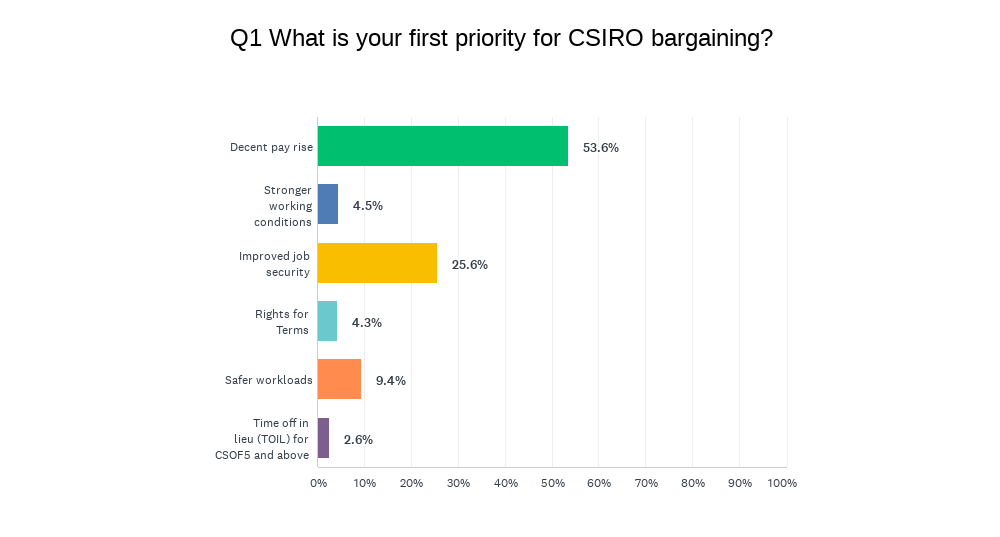
Perhaps unsurprisingly, more than a quarter (25.6 per cent) nominated improved job security as top priority, with 22 per cent placing the issue in the top three overall.
“There needs to be improved job security for early to mid career scientists, with indefinite employment the default rather than fixed term appointments.”
“The research sector, broadly, is being shredded; from universities to our national organisations such as CSIRO… It’s deeply concerning.”
Just below ten per cent (9.4) nominated safer workloads as the first priority for bargaining. However, across the top three choices, stronger working conditions joined safer workloads as the equal third priority overall.
That concern over the impact of job cuts on workloads is also reflected in the early analysis of a separate Staff Association workplace health and safety survey, involving nearly four hundred and fifty (447) respondents.
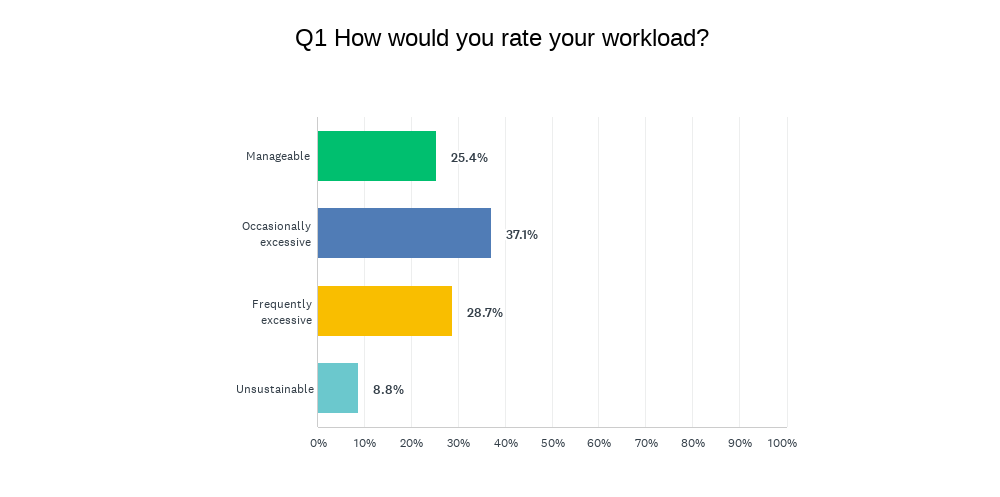
Only 25 per cent of participants said their CSIRO workload as manageable, with the remaining three quarters describing their current duties as occasionally excessive (37%), frequently excessive (29%) or unsustainable (9%).